How to Build a Personal Brand: Step-by-Step Guide 2026
A strong reputation used to grow mostly through introductions, workplaces, and local networks. Today, a recruiter, client, customer, podcast host, investor, or potential collaborator can form an opinion about you before you ever speak, simply by searching your name and scanning what you publish.
That is why learning how to build a personal brand is no longer just an influencer exercise. It is a practical career and business skill. This guide shows you how to define what you want to be known for, create proof, build a consistent online presence, publish useful content, grow relationships, measure what is working, and improve the system without turning your life into a full-time social media job.
How Do You Build a Personal Brand?
To build a personal brand, define the audience you want to help, choose the expertise you want to be known for, create a clear value proposition, optimize your public profiles, publish useful proof-driven content, build genuine relationships, and track which activities create opportunities. Consistency matters more than posting everywhere.
A durable brand is not a logo, a color palette, or a clever bio. It is the repeated expectation people develop about the value you provide. Harvard Business Review describes personal branding as an intentional process of defining and communicating your value; its personal brand strategy framework is a useful reminder that reputation is built through both message and behavior.
Essential Tools, Platforms, and Materials
You can start with almost no budget. Spend money only when it removes a bottleneck or improves trust at a point that matters, such as a professional headshot, a clean domain, or better audio for frequent video work.
| Tool or Asset | What It Does | Starter Cost | Skill Level | Priority |
| Positioning worksheet | Clarifies audience, expertise, promise, and proof | Free | Beginner | Essential |
| Professional headshot | Creates a consistent first impression across profiles | $0-$150 | Beginner | High |
| LinkedIn profile | Professional discovery, networking, and proof | Free | Beginner | Essential |
| Personal domain | Gives you a memorable, owned web address | About $10-$25/year | Beginner | High |
| Simple website or portfolio | Central hub for bio, proof, services, and contact | $0-$30/month | Beginner-Intermediate | High |
| Canva or similar design tool | Reusable social graphics, carousels, banners | Free-$15/month | Beginner | Medium |
| Notes/content database | Stores ideas, stories, proof, and draft posts | Free-$15/month | Beginner | Essential |
| Scheduling tool | Queues posts and reduces daily admin | Free-$30/month | Beginner | Optional |
| Basic microphone/light | Improves perceived quality for video or podcasting | $0-$150 | Beginner | Optional |
| Analytics dashboard | Tracks profile views, reach, site traffic, and conversions | Mostly free | Intermediate | Essential |
Budget rule: do not buy a complete “personal branding stack” on day one. Start with a profile, a positioning document, a repeatable content process, and one owned destination such as a simple website.
Decide What You Want to Be Known For
The first mistake people make when figuring out how to build a personal brand is starting with design. They choose fonts, colors, a new profile banner, and a posting schedule before deciding what the brand is supposed to mean.
Begin with a one-sentence positioning draft:
I help [specific audience] achieve [specific outcome] through [specific expertise or method].
Examples:
“I help B2B founders turn technical products into sales-ready marketing.”
“I help junior developers learn production-ready Java and cloud architecture.”
“I help busy parents make small home upgrades without overspending.”
“I help local service businesses generate qualified leads from search.”
Your first draft does not need to be poetic. It needs to be useful. A clear statement gives you a filter for what to publish, which opportunities to accept, and what proof to collect.
Choose a narrow entry point, not a tiny identity
A niche helps people remember you. It does not imprison you forever.
Think of your brand as a doorway. “Marketing” is too broad to be memorable, while “SEO audits for local service businesses” is specific enough to build recognition. Once people trust you in the doorway topic, you can expand into adjacent subjects such as content, paid media, analytics, or automation.
Build a three-layer expertise map
Write down three categories:
- Core expertise: the subject you want people to associate with your name.
- Supporting expertise: skills that make the core expertise more valuable.
- Human context: interests, operating principles, or experiences that make your perspective distinct.
For example, a personal brand for a software architect might center on distributed systems, support it with AWS and payments expertise, and add a human layer around mentoring engineers and simplifying complex tradeoffs.
💡 Quick Hack: Ask five colleagues or clients, “What are the three things you would confidently ask me for help with?” Repeated answers are often more useful than a personality quiz because they reveal the reputation you already have.

Define Your Audience and Their High-Value Problems
If your audience is “everyone,” your content becomes generic. A personal brand becomes more useful when it is built around a specific group of people and the problems they repeatedly face.
If you are learning how to build a personal brand for a specific career or business goal, this audience definition is the point where the plan becomes commercially useful.
Create a one-page audience card with these fields:
Job, business type, or life stage
Current goal
Main obstacles
What they have already tried
Common misconceptions
Questions they ask before buying, hiring, or following
Where they already spend attention
What proof they need before they trust advice
A freelance designer targeting early-stage SaaS founders will create a different brand than a designer targeting luxury hospitality groups. The skill may overlap, but the examples, language, proof, platforms, and calls to action should change.
Find “expensive” problems
High-value brands are often attached to costly problems. Cost can mean money, time, risk, stress, or missed opportunity.
Instead of saying “I post productivity tips,” say you help agency owners reduce project chaos. Instead of “I talk about career growth,” focus on helping mid-career engineers move into architecture or leadership roles.
When you understand the stakes, your content becomes more specific and your expertise becomes easier to value.
Build a Personal Brand Statement That Sounds Human
A personal brand statement should help a stranger quickly answer three questions: What do you do? Who is it for? Why should they care? This is one of the fastest exercises in how to build a personal brand because it forces vague expertise into a memorable promise.
Use this structure:
Role/expertise + audience + outcome + proof or differentiator.
Example:
SEO strategist for home-service companies, focused on technical fixes, local visibility, and content systems that turn organic traffic into qualified leads.
Avoid inflated language such as “visionary,” “world-class,” “guru,” or “disruptive leader” unless objective evidence makes the claim obvious. Credibility is stronger when the reader reaches the conclusion for themselves.
Create three versions
You need more than one length:
8-word version: for headlines and bios.
25-word version: for introductions and profile summaries.
75-word version: for About pages, speaker bios, and proposals.
This removes the common problem of reinventing your introduction every time someone asks what you do.
Pro-Tip: Put the audience and outcome before the tools. “I help ecommerce teams increase repeat revenue” is more memorable than “Klaviyo, Shopify, GA4, CRO specialist.” Tools change; the outcome is the reason people remember you.
Audit What People See When They Search Your Name
Before adding new content, inspect the current brand surface. Anyone researching how to build a personal brand should treat this audit as a baseline, because you cannot improve signals you have not examined. Search your name in a private browser window and review the first two pages of results.
Check:
Search result titles and descriptions
LinkedIn, X, Instagram, YouTube, GitHub, Behance, Dribbble, or other public profiles
Old bios on company websites
Guest posts, podcasts, interviews, conference pages, and directories
Inconsistent job titles or dates
Outdated profile photos
Public posts that conflict with your current positioning
Duplicate or abandoned profiles
The goal is not to erase your personality. It is to remove avoidable confusion.
Standardize your identity assets
Use the same professional name, headshot, core title, and short value proposition across your priority platforms. LinkedIn calls the profile a professional landing page for managing your personal brand, and its guidance on how to create a good LinkedIn profile emphasizes a complete photo, headline, summary, relevant experience, skills, and recommendations.
A consistent profile photo helps people recognize you when they move from a search result to LinkedIn, then to your website, then to a webinar or email.
Fix your headline first
Your headline is high-value digital real estate. Do not waste it on a title alone.
Weak:
Founder at ABC Consulting
Stronger:
B2B SEO Strategist | Technical Audits, Content Systems & Organic Lead Generation
The stronger version communicates category, expertise, and value without forcing the reader to click further.
Create an Owned Home Base
Social networks are rented land. They are useful for distribution and relationships, but platform rules, reach, account access, and formats can change.
An owned home base gives your brand continuity. For most professionals, this can be a one-page website with:
- A clear headline
- A short credibility paragraph
- Three to five areas of expertise
- Selected proof or case studies
- Featured content or media appearances
- Testimonials or recommendations
- A clear contact method
If you are building a business around your expertise, a site also gives you room to capture email subscribers, publish long-form content, and create pages for services or products. If budget is tight, the same lean approach used when you start a business with no money applies here: buy only the infrastructure that supports a real next step.
💡 Quick Hack: Buy a clean version of your name as a domain if available, but do not delay the brand because the perfect `.com` is taken. A professional variation with your name plus your discipline is usually better than a clever but forgettable domain.
Build a Content System Around Proof, Not Motivation
Publishing is where many people stall. They assume they need a daily stream of original ideas. They do not.
The reliable way to learn how to build a personal brand through content is to document what you know, what you are learning, what you are testing, and what you can prove.
Create four content pillars:
- Teach: frameworks, tutorials, checklists, mistakes, explanations.
- Prove: case studies, before-and-after results, lessons from real work.
- Interpret: your view on industry changes, trends, tools, and tradeoffs.
- Humanize: selected stories about decisions, failures, principles, or behind-the-scenes work.
A good weekly mix might be two teaching posts, one proof post, and one short opinion or story.
Use a proof library
Create a private document with:
Results you helped produce
Screenshots and metrics you are allowed to share
Client or manager feedback
Questions people repeatedly ask you
Projects you completed
Mistakes you learned from
Useful templates you created
Talks, interviews, awards, or certifications
Before-and-after examples
This becomes the raw material for months of content.
Turn one idea into multiple formats
One useful idea can become:
A long-form article
A LinkedIn post
A five-slide carousel
A short video
An email
A checklist
A podcast talking point
A webinar section
The goal is not to copy-paste the same message everywhere. Adapt one core insight to the format people expect on each channel.
Google’s people-first content guidelines emphasize original, useful, trustworthy content that demonstrates real expertise. That principle also works for personal branding: publish material that would still help your audience even if no algorithm rewarded it.

💡 Quick Hack: Keep an “idea inbox” on your phone. Every time a client asks a question, a teammate challenges an assumption, or you solve a frustrating problem, write one sentence. Real questions produce stronger content than staring at a blank content calendar.
Create a sustainable cadence
A realistic system beats an ambitious one you abandon after two weeks.
Start with:
1 substantial post per week
2 shorter posts or replies
10-15 minutes of thoughtful commenting on three days
1 monthly long-form asset such as an article, guide, video, or case study
If you need to speed up research, outlining, transcription, or repurposing, use AI as an assistant rather than a substitute for expertise. MyFlexBots’ guide to the best AI tools for productivity can help you build a leaner workflow without turning your feed into generic machine-written posts.
Make Your Visual Identity Consistent, Not Complicated
Visual branding is a recognition system. It should make your work easier to identify, not consume hours of design time.
Choose:
One primary headshot
One backup casual/professional photo style
Two typefaces at most
A simple color pair or neutral palette
One layout for carousels or quote graphics
One banner style across major profiles
Your visual system should be easy enough to reproduce in minutes.
Headshot checklist
A useful professional photo typically has:
Clear eyes and face
Natural expression
Simple background
Clothing that matches the environment you want to work in
Enough crop space for circular profile frames
Current appearance
Avoid using a dramatically different image on every platform. Recognition compounds.
Pro-Tip: A smartphone near a large window can produce a very credible headshot. Use portrait mode carefully, keep the background clean, and ask someone to take 20-30 frames. The best photo is usually a relaxed frame near the end, not the first one.
Grow Through Relationships, Not Just Reach
Audience size can be useful, but relationships create disproportionate opportunities. The relationship side of how to build a personal brand is often what turns visibility into referrals, interviews, invitations, and revenue. Ten people who trust your work can matter more than 10,000 passive followers.
A practical networking system includes three circles:
Peers: people doing adjacent work at a similar level.
Multipliers: people with communities, teams, publications, events, or audiences.
Buyers/gatekeepers: people who hire, commission, refer, or approve opportunities.
Do not approach every relationship with an ask. Become useful first.
Useful networking actions include:
Add a specific insight to someone’s post
Introduce two people who should know each other
Share a useful resource without demanding a reply
Congratulate someone on a meaningful milestone
Invite an expert to contribute one quote to an article
Refer work that is not a fit for you
Send a concise follow-up after meeting at an event
💡 Quick Hack: Create a “relationship 20” list with 20 people you genuinely want to know better. Each week, interact meaningfully with three or four. This is more manageable and authentic than trying to network with hundreds of strangers.
Ask for recommendations at the right moment
The best time to request a testimonial or recommendation is immediately after a visible win, successful delivery, or sincere compliment.
Make the request easy:
“Would you be comfortable writing two or three sentences about the problem we worked on and what improved? Specific outcomes are especially helpful.”
The prompt guides the person toward useful proof without scripting their praise.
Create Signature Intellectual Property
The strongest personal brands become associated with an idea, framework, diagnostic, method, or category.
This does not need to be groundbreaking academic research. It can be a memorable way of organizing your experience.
Examples:
A five-step audit process
A scoring model
A recurring annual report
A named checklist
A decision tree
A simple visual framework
A distinctive comparison method
A signature framework gives people something easy to remember and share. It also turns scattered expertise into an asset you can use in talks, articles, consulting, courses, or products.
Name the framework after it works
Do not waste days naming an untested idea. First use the method repeatedly. When you see that it helps people, give it a simple name that describes the outcome.
This is a powerful next step once you understand how to build a personal brand because it shifts your reputation from “person who posts about a topic” to “person associated with a useful way of solving a problem.”
Build Credibility Through Third-Party Proof
Self-published content establishes consistency. Third-party validation adds another layer of trust.
Look for opportunities such as:
Guest articles
Podcast interviews
Industry newsletters
Conference talks
Webinar panels
Professional associations
Expert quotes in media
Open-source projects
Community workshops
Awards with credible selection standards
Start small. A niche podcast with the right audience can be more useful than a large general audience.
Create a simple media kit
Keep one folder containing:
50-word bio
100-word bio
Headshot
Three speaking topics
Three proof points
Website and social links
Prior appearances
Contact details
When an opportunity appears, you can respond quickly instead of rebuilding assets from scratch.
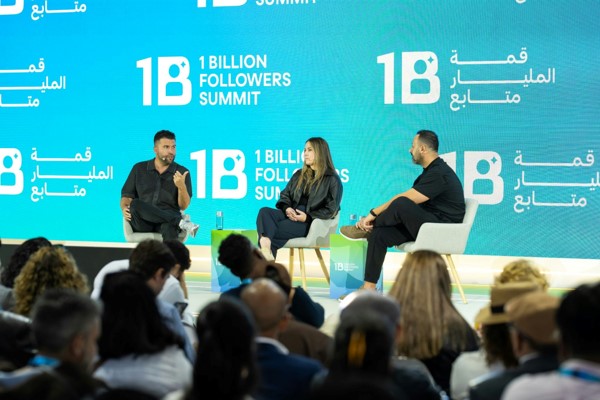
Pro-Tip: After every interview, podcast, or event, ask for the permanent page URL and permission to reuse clips or quotes. One appearance can become proof on your website, a social post, a short video, and a reference in future pitches.
Add a Clear Conversion Path
Attention is not the finish line. Decide what you want a qualified person to do next.
Your primary call to action could be:
Subscribe to a newsletter
Book a consultation
View a portfolio
Download a checklist
Read a cornerstone guide
Request a proposal
Invite you to speak
Connect on LinkedIn
Choose one primary path for each page or profile. Too many choices reduce action.
If you are employed and not selling services, your conversion path may simply be “view my work,” “read my case studies,” or “contact me for speaking and collaboration.”
Measure Brand Growth With Opportunity Metrics
Vanity metrics are easy to watch and easy to misread. Follower count and impressions matter only when they support a meaningful outcome.
Track metrics in four layers:
Visibility
Search impressions for your name
Profile views
Content reach
Website visitors
Engagement quality
Saves
Replies
Thoughtful comments
Direct messages that reference your work
Newsletter replies
Authority
Branded searches
Backlinks and mentions
Invitations to contribute
Podcast or speaking requests
Recommendations and testimonials
Opportunity
Qualified leads
Job interviews
Referral introductions
Partnerships
Consulting inquiries
Revenue influenced by personal brand content

Review these monthly, not hourly. Brand building has a longer feedback loop than paid advertising.
💡 Quick Hack: Add a “How did you hear about me?” field to contact forms and discovery calls. It often reveals influence that analytics cannot attribute, such as someone who followed your posts for six months before sending an inquiry.
Common Mistakes to Avoid
- Trying to look famous instead of useful
Manufactured authority is fragile. Buying followers, exaggerating results, or turning every post into a victory announcement may create numbers without trust.
Fix it by publishing practical material, showing process, and using verifiable proof.
- Talking about too many unrelated topics
A feed that jumps from crypto to fitness to SaaS marketing to travel to leadership may reflect a real person, but it makes professional positioning harder to remember.
You can have broad interests. Keep the professional brand anchored to a small number of connected themes.
- Copying another creator’s voice
Templates help, but imitation makes you interchangeable. The fastest route to originality is to use your own examples, decisions, failures, numbers, and tradeoffs.
- Posting without building relationships
Broadcasting alone limits trust. Set aside time for conversations, thoughtful comments, introductions, and follow-ups.
- Rebranding every few weeks
Constantly changing your headline, niche, colors, and content direction resets recognition. Give a clear positioning strategy enough time to create a pattern.
A useful rule is to keep the core positioning stable for at least one quarter unless evidence shows it is fundamentally wrong.
Advanced Tips and Next-Level Hacks
Once the foundation is working, the next level is leverage: making each unit of expertise travel farther.
Build a “content flywheel”
Use this sequence:
- Solve a real problem.
- Document the lesson.
- Publish a useful explanation.
- Collect audience questions.
- Turn questions into deeper content.
- Package the best material into a guide, talk, template, or product.
- Use the resulting proof to access better projects and conversations.
The work improves the content, and the content attracts better work.
Create a recognizable series
Recurring series reduce the burden of invention. Examples include:
“Friday Field Notes”
“One Chart, One Lesson”
“SEO Fix of the Week”
“Architecture Tradeoff Tuesday”
“Before You Buy”
A repeatable format teaches the audience what to expect.
Borrow distribution ethically
Collaborate with people who serve the same audience but offer different expertise. Co-write a guide, interview each other, run a webinar, or create a joint checklist.
This gives both sides relevant exposure without the awkwardness of asking for a shout-out.
Build an email list early
Even a small list is valuable because you control the relationship. Send a useful monthly or biweekly note rather than an empty weekly newsletter just to maintain frequency.
Use a simple operating system
A lightweight personal-brand workflow can run through one note database, one calendar, one design template, and one analytics sheet. If you need help selecting the system, a curated list of best productivity apps can help you avoid stacking five tools that all do the same job.
Troubleshooting and Long-Term Maintenance
Personal brands rarely fail because of one bad post. They drift because the positioning becomes stale, the content stops reflecting current expertise, or the owner burns out.
Problem: Your posts get little engagement
Check whether the content is specific enough. Generic advice often earns polite likes but little discussion.
Try this diagnostic:
Is the first line about a real problem?
Is there a concrete example?
Is the advice usable today?
Does the post include a perspective or tradeoff?
Is the audience clear?
Rewrite one generic post using a real scenario and compare the response.
Problem: People engage, but opportunities do not improve
Your content may be interesting but disconnected from what you want to be hired for.
Audit your last 20 posts. Count how many demonstrate the skills tied to your target opportunities. If fewer than half do, adjust your content mix.
Problem: Your audience is growing in the wrong direction
Viral content can attract people who will never need your expertise. Growth is not automatically useful.
Return to your audience card and publish more content around high-value problems, case studies, and industry-specific examples.
Problem: You feel pressure to post every day
Reduce frequency and increase substance. One strong weekly post plus active conversation can outperform seven forgettable posts.
Batch research and outlines once a week, then schedule only what is worth publishing.
Problem: Your brand no longer fits your career
This is normal. Expertise evolves.
Use a bridge strategy instead of an abrupt pivot. For six to twelve weeks, connect the old topic to the new one through transition content. A developer moving into architecture might write about design decisions, system tradeoffs, mentoring, and stakeholder communication before changing the headline to “Solution Architect.”
Quarterly maintenance checklist
Every 90 days:
Review profile headline and About section
Update recent wins and portfolio proof
Search your name and inspect results
Remove broken links
Refresh pinned/featured content
Review top-performing posts by quality of opportunity, not reach alone
Ask whether your content still reflects the work you want next
Update your relationship 20 list
Archive stale offers or positioning
This maintenance cycle is part of how to build a personal brand that stays useful as your career changes.
Frequently Asked Questions
How long does it take to build a personal brand?
When people ask how to build a personal brand quickly, the useful answer is to separate setup from reputation. You can improve your positioning and public profiles in a weekend, but reputation compounds over months. Most people should think in 90-day cycles: define the message, publish consistently, build relationships, review signals, and refine. Recognition in a competitive field may take a year or more, while a narrow niche can develop faster.
Do I need a website for a personal brand?
No, but an owned website becomes increasingly useful as your work grows. It gives you a stable place for your bio, proof, case studies, email list, services, and contact details. Start with one clean page if a full site would delay action.
Which social media platform is best for personal branding?
Choose the platform where your target audience already pays attention. LinkedIn is strong for professional services, B2B, recruiting, and career visibility. YouTube can be powerful for searchable expertise. Instagram and TikTok can work well for visual education and consumer niches. You do not need to dominate all of them.
Can I build a personal brand without showing my face?
Yes. Writers, developers, analysts, researchers, and creators can build strong reputations through ideas, projects, case studies, tutorials, code, newsletters, or voice content. A face can accelerate recognition and trust in some contexts, but useful work is the foundation.
What should I post when I have no audience?
Post the material that would help the audience you want. Answer real questions, explain your process, break down mistakes, share useful templates, and document small projects. Early content is practice and proof; it does not need to go viral to be valuable.
How do I build a personal brand if I am an introvert?
Use formats that match your energy. Write instead of livestreaming. Schedule a few high-quality one-to-one conversations instead of attending every event. Prepare questions before networking calls. Personal branding rewards clarity and consistency, not constant performance.
Conclusion: Build a Reputation Before You Build an Audience
The core lesson in how to build a personal brand is simple: decide what valuable expectation you want attached to your name, then reinforce it through useful work, visible proof, consistent communication, and strong relationships.
Start smaller than you think. Clarify one audience, one problem category, one profile, one publishing rhythm, and one call to action. Once that system works, expand it deliberately.
editor's pick
latest video
news via inbox
Nulla turp dis cursus. Integer liberos euismod pretium faucibua