Best Business Ideas 2026: Profitable Trends to Start
Starting a business in 2026 is exciting, but it is also noisy. Everyone is talking about AI, online stores, creators, automation, and “easy money,” yet most beginners still fail because they pick an idea before checking demand, margins, and delivery difficulty. This guide breaks down best business ideas 2026 in a practical way so you can choose an idea, validate it quickly, launch lean, and avoid wasting months on something nobody is ready to buy.
You will learn how to compare ideas, estimate costs, validate demand, build your first offer, get early customers, and troubleshoot the problems that usually stop new founders. The goal is not to chase trends blindly. The goal is to choose a business that fits your skills, budget, location, and ability to execute consistently.
Quick Answer: What Are the Best Business Ideas for 2026?
The best business ideas 2026 are lean, demand-backed models such as AI automation services, niche e-commerce, senior support services, cybersecurity setup, short-form video production, home maintenance subscriptions, local service lead generation, digital products, and specialized B2B services. The winners solve urgent problems, keep startup costs controlled, and create repeatable systems.
How to Think About Business Ideas in 2026
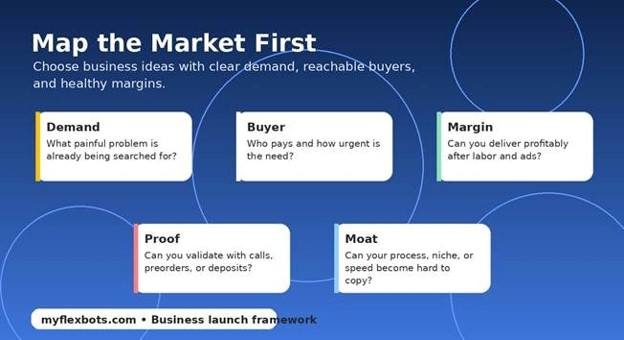
A good idea is not automatically a good business. A good business has a buyer, a painful problem, a clear result, a channel to reach customers, and margins that survive after tools, taxes, refunds, delivery time, and marketing costs.
That is why the strongest opportunities in best business ideas 2026 are not just “AI businesses” or “online stores.” They are specific offers aimed at specific customers. “AI automation for dental clinics” is more useful than “AI agency.” “Monthly home maintenance for busy villa owners” is stronger than “handyman service.”
Use a simple filter before you fall in love with any idea:
- Demand: Are people already searching for, complaining about, or paying for this?
- Urgency: Does the problem cost money, waste time, create risk, or cause stress?
- Margin: Can you deliver profitably after tools, labor, delivery, ads, and support?
- Access: Can you reach buyers through SEO, social media, partnerships, calls, referrals, or marketplaces?
- Repeatability: Can the service or product become a checklist, subscription, package, or recurring system?
💡 Quick Hack: Search the exact problem on Google, Reddit, YouTube, TikTok, LinkedIn, Facebook groups, and marketplace reviews. If people are asking the same question repeatedly, the market is showing you the language for your offer.
Essential Tools & Startup Materials Breakdown
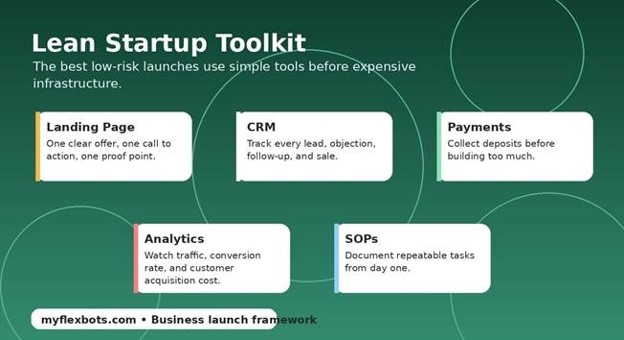
For this guide, “materials” means the practical assets you need to start: software, systems, basic finance tools, content assets, and proof. You do not need an expensive office, custom app, or full team on day one. You need a lean setup that lets you test demand and deliver cleanly.
The U.S. Small Business Administration recommends writing a business plan because it clarifies the foundation of your company, including market, funding, operations, and sales strategy. You do not need a 40-page corporate document. You need a working plan that helps you make better decisions and avoid emotional spending.
| Startup Asset / Tool | What It Does | Low-Budget Option | Estimated Cost | Skill Level |
| Market research sheet | Compares demand, competitors, pricing, pain points, and buyer urgency. | Google Sheets or Airtable free plan | $0-$20/month | Beginner |
| Landing page | Tests the offer before you build a full website. | Carrd, WordPress, Notion page, or one-page WooCommerce page | $0-$30/month | Beginner |
| CRM pipeline | Tracks leads, follow-ups, objections, proposals, and closed deals. | HubSpot free, Trello, Notion, or Airtable | $0-$50/month | Beginner |
| Payment collection | Collects deposits, retainers, subscriptions, or preorders. | Stripe, PayPal, local bank transfer, Shopify/WooCommerce payments | 2%-4% processing or local fee | Beginner |
| Basic analytics | Shows which traffic and sales pages actually convert. | GA4, Search Console, UTM links, platform dashboards | $0 | Beginner-Intermediate |
| AI productivity stack | Speeds up research, proposals, scripts, workflows, and customer support. | ChatGPT, Claude, Gemini, automation tools, Zapier/Make | $0-$100/month | Intermediate |
| Design/content tools | Creates posts, thumbnails, ads, PDFs, videos, and lead magnets. | Canva, CapCut, Figma, Google Docs | $0-$50/month | Beginner |
| Operations checklist | Documents delivery steps so quality is repeatable. | Google Docs, Notion, ClickUp, SOP templates | $0-$30/month | Beginner |
| Legal/finance basics | Keeps cash flow, taxes, contracts, invoices, and liabilities under control. | Local accountant, simple contract templates, invoice software | $50-$500+ setup | Intermediate |
Choose a Business Using the Demand-Profit-Fit Scorecard
Do not choose from a list of best business ideas 2026 by asking, “What sounds exciting?” Ask, “Where can I create a paid result faster than competitors?” That one question changes everything.
Score every idea from 1 to 5 in these six categories:
- Buyer urgency: How painful is the problem?
- Budget: Does the customer already spend money in this category?
- Speed to first sale: Can you sell before building a big system?
- Delivery simplicity: Can you deliver the first version without hiring a large team?
- Recurring revenue potential: Can buyers pay monthly or come back often?
- Personal edge: Do you have skills, contacts, local access, language, or industry experience?
A boring idea with a score of 24 out of 30 usually beats a trendy idea with a score of 12. For example, bookkeeping for contractors may sound less glamorous than launching a lifestyle brand, but it may be easier to sell because the buyer already understands the pain.
Pro-Tip: Give extra weight to ideas where the customer has an existing budget. If a buyer already pays for ads, maintenance, software, accounting, cleaning, content, security, or training, you are not creating a new category. You are replacing or improving an existing spend.
Validate Before You Build
Validation means proving that people care enough to take action. Likes are not validation. Compliments are not validation. “Great idea, bro” is not validation. A deposit, booked call, waitlist with qualified buyers, signed proposal, trial customer, or paid pilot is validation.
Use this lean validation process:
- Write one sentence: “I help [specific customer] get [specific result] without [specific pain].”
- Find 30 prospects: Use LinkedIn, Google Maps, Instagram, industry directories, local communities, or existing contacts.
- Ask problem-first questions: “How are you solving this right now?” “What does it cost you?” “What have you tried?”
- Create a simple offer: Package the result, not the tasks.
- Ask for action: Deposit, call, pilot, preorder, email signup, or referral.
For example, instead of saying “I offer AI automation,” say: “I help real estate agencies cut inquiry response time by setting up an AI-assisted lead routing and follow-up system.” That is clearer, easier to price, and easier to sell.
💡 Quick Hack: Build a one-page “fake door” landing page before investing heavily. Run a small ad, post in relevant groups, or send direct outreach. If nobody clicks, books, asks, or replies, change the audience or offer before you build.
Build the Lean Offer
The first version of your offer should be small enough to deliver manually but valuable enough to charge for. This is where many beginners overbuild. They spend weeks making a logo, website, app, packaging, business cards, and social profiles before talking to one buyer.
A lean offer has five parts:
- Outcome: The result the customer wants.
- Scope: What is included and excluded.
- Timeline: How long delivery takes.
- Proof: Why the buyer should trust you.
- Price: A simple package, pilot, or monthly plan.
Here is a simple structure:
Starter Package: Low-risk entry offer that solves one painful problem.
Growth Package: More complete version with strategy, implementation, and support.
Recurring Plan: Monthly maintenance, reporting, optimization, or support.
This structure works for AI services, local services, content production, digital marketing, cybersecurity, home maintenance, virtual assistance, bookkeeping, and consulting.
The Shortlist of Business Ideas Worth Considering
Here is the shortlist of best business ideas 2026 you can study, compare, and adapt. Do not try to launch all of them. Pick one that matches your strengths and run the scorecard.
1. AI Workflow Automation Service
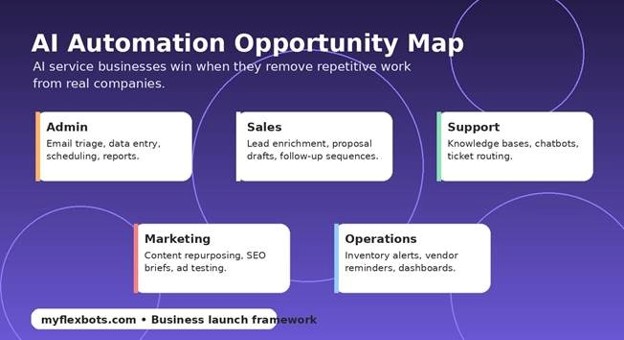
An AI workflow automation service helps small businesses reduce repetitive tasks like lead sorting, customer replies, reporting, scheduling, invoice reminders, and content repurposing. The opportunity is strong because many companies are using AI casually, but few have turned it into dependable systems.
This is one of the best business ideas 2026 for people who understand business operations, digital tools, and communication. You do not need to invent a new AI model. You need to connect existing tools into useful workflows and train staff to use them responsibly.
Best customers include real estate agencies, clinics, agencies, e-commerce stores, accountants, consultants, and local service companies. Start with one niche and one painful workflow.
Starter offer example: “We set up an AI-assisted inquiry response and follow-up system in 7 days.”
Estimated startup cost: $100-$500 for tools, website, demos, and outreach.
Main risk: Overpromising. Keep humans in the loop for sensitive decisions, customer complaints, medical, legal, or financial advice.
2. Niche E-Commerce Brand
E-commerce is still a serious opportunity, but broad stores are harder than ever. The stronger play is a focused niche with a defined buyer, clear product benefit, and trust-building content. U.S. Census Bureau data shows e-commerce continues to represent a meaningful share of retail sales, so the channel is not disappearing. The question is whether your offer stands out.
Good niches include pet accessories, modest fashion, home office upgrades, cleaning tools, kitchen gadgets, hobby kits, wellness accessories, travel organizers, and products for specific professions.
This is one of the best business ideas 2026 for founders who can combine product selection, content, customer service, and conversion optimization. Do not start with 200 products. Start with 3 to 10 products that solve related problems.
💡 Quick Hack: Read one-star and three-star reviews on Amazon, Etsy, TikTok Shop, Daraz, or local marketplaces. Complaints reveal product improvement angles, better bundles, missing instructions, sizing issues, and customer language for your product page.
3. Senior Support and Care Coordination
Healthcare and social assistance are projected to be major employment growth drivers in the coming decade, according to the U.S. Bureau of Labor Statistics. That does not mean you should offer medical services without licensing. It means there is rising demand around support, coordination, transportation, errands, appointment reminders, companionship, home safety checks, and family communication.
A non-medical senior support business can help families manage everyday tasks for aging parents. Depending on your location, you may need licensing, insurance, background checks, and strict boundaries.
Starter offer example: weekly check-in visits, grocery coordination, medicine pickup reminders, transport booking, and family updates.
Best buyer: adult children who are busy, overseas, or working full-time.
Main risk: Liability. Keep the scope non-medical unless you are properly licensed.
4. Cybersecurity Setup for Small Businesses
Small businesses often have weak passwords, no two-factor authentication, poor backups, shared logins, outdated plugins, and no staff training. A cybersecurity setup service can package basic protection in a way non-technical owners understand.
You can offer password manager setup, 2FA rollout, backup checks, device hygiene, phishing training, access control, website plugin audits, and simple security policies.
This business works well for IT freelancers, web developers, agencies, and consultants. It can also be sold as a monthly maintenance plan.
Pro-Tip: Do not sell fear. Sell calm. “We reduce avoidable security risks in one week” is stronger than “Hackers will destroy your business.”
5. Short-Form Video and Content Repurposing Studio
Many businesses know they need video, but they do not have time to plan, shoot, edit, caption, post, and repurpose content. A short-form video studio can turn one recording session into reels, shorts, TikToks, LinkedIn clips, YouTube snippets, Pinterest pins, and blog outlines.
This is one of the best business ideas 2026 for people who understand hooks, editing rhythm, social platforms, and content calendars. You can start with a phone, microphone, CapCut, Canva, and a clear package.
Starter offer example: “Four short-form videos per week from one monthly recording session.”
Best niches: coaches, real estate agents, restaurants, clinics, gyms, law firms, contractors, schools, and local brands.
6. Local Service Lead Generation
Local service businesses need leads, but many owners are too busy to run SEO, Google Business Profile, landing pages, ads, review systems, and follow-up. A lead generation business builds demand and either sells leads, books calls, or earns a commission from closed deals.
Good categories include painting, cleaning, pest control, moving, home maintenance, HVAC, plumbing, landscaping, renovation, tutoring, and repair services.
This model can be profitable, but it requires quality control. Bad leads damage relationships. Poor contractor delivery damages your brand. Start with one city and one service.
💡 Quick Hack: Pick services where one closed customer is worth enough to pay for acquisition. A $20 product sale cannot support expensive lead generation. A $1,500 renovation job can.
7. Subscription Home Maintenance Service
Busy homeowners do not want to remember air filter changes, AC servicing, minor repairs, gutter cleaning, pest prevention, paint touch-ups, plumbing checks, or seasonal maintenance. A subscription home maintenance service bundles routine tasks into a monthly or quarterly plan.
This business can be delivered directly if you have trade skills or coordinated with trusted subcontractors. The recurring model is attractive because it smooths cash flow.
Start with a simple plan: quarterly inspection, priority booking, minor fixes, and a digital home maintenance report.
Main risk: Scope creep. Define what is included and charge separately for larger repairs.
8. Bookkeeping and Cash Flow Support for Micro Businesses
Many freelancers, contractors, creators, small shops, and service businesses do not need a full finance department. They need clean invoices, expense tracking, monthly reports, tax-ready records, and cash flow visibility.
If you have accounting skills, this can become a stable B2B service. You can specialize in one niche, such as digital agencies, salons, real estate agents, construction subcontractors, Shopify sellers, or creators.
Starter offer example: “Monthly bookkeeping cleanup and cash flow snapshot for solo business owners.”
Pro-Tip: Package by complexity, not just hours. Number of accounts, transactions, payroll, inventory, and reporting needs should influence price.
9. Online Education or Cohort-Based Training
People are willing to pay for skills that help them earn, save time, pass exams, improve careers, or solve practical problems. Online education works best when the course is specific and outcome-focused.
Instead of “digital marketing course,” try “30-day local SEO bootcamp for home service companies” or “Excel dashboard training for finance interns.” Specificity improves trust and conversion.
This is a strong option for experts who can teach clearly and provide support. Start with a live workshop before building a full recorded course. Live delivery shows which lessons confuse people.
10. B2B Virtual Operations Agency
A virtual operations agency helps founders and small teams manage email, scheduling, CRM updates, SOPs, customer onboarding, reporting, vendor coordination, and admin workflows. It is more valuable than generic virtual assistance because it sells operational relief, not random tasks.
Best customers include consultants, agencies, coaches, clinics, online stores, and growing service businesses.
Starter offer example: “We clean up your inbox, calendar, CRM, and weekly reporting system in 14 days.”
Main risk: Disorganization inside your own business. You need checklists, onboarding forms, password security, and clear communication rules.
11. Digital Product Templates and Toolkits
Templates can be a lean business if they solve a specific problem. Examples include Notion dashboards, Canva templates, proposal templates, budget trackers, meal planners, SEO checklists, content calendars, real estate calculators, and business SOP packs.
The biggest mistake is creating generic templates. The better path is to build for one buyer with one recurring task.
Starter offer example: “Client onboarding SOP pack for small digital agencies.”
Marketing channels: SEO, Pinterest, LinkedIn, YouTube tutorials, Gumroad, Etsy, and your own website.
12. Recommerce, Repair, and Refurbishment
Consumers are becoming more careful with spending, and many prefer refurbished, repaired, or pre-owned products when the value is clear. Recommerce can include used electronics, furniture, children’s items, fashion, tools, books, gym equipment, and office gear.
This business requires strong sourcing, cleaning, quality checks, honest descriptions, and logistics. Profit is made when you buy well, improve presentation, and reduce returns.
💡 Quick Hack: Build trust with detailed condition grading, real photos, short demo videos, and a simple return policy. In recommerce, trust is the product.
13. Pet Services With a Specialty
Pet owners spend on grooming, walking, sitting, training, accessories, nutrition support, photography, and travel care. The opportunity is stronger when you specialize.
Examples: nervous-dog grooming, cat sitting for apartment owners, puppy socialization walks, pet taxi service, senior pet care visits, or premium pet birthday photography.
This works well locally because trust and referrals matter. Start with neighborhood groups, Google Business Profile, and simple packages.
14. Sustainability and Energy-Saving Services
Many homes and small businesses want lower bills and more efficient operations, but they do not know where to begin. A sustainability service can offer energy checklists, LED upgrades, insulation coordination, water-saving fixtures, waste reduction, solar vendor comparisons, and simple reporting.
You do not need to be an engineer for basic audits, but you must know your limits and bring licensed partners for technical work.
This business fits the larger movement toward cleaner energy, efficiency, and cost control. It can also work as a consulting add-on for property managers and small offices.
15. Micro-SaaS or No-Code Tools
A micro-SaaS is a small software product that solves a narrow problem for a niche audience. In 2026, no-code and AI-assisted development make this more accessible, but it is still not “easy money.” The hard part is not building the tool. The hard part is choosing a painful problem people will pay to solve.
Good micro-SaaS ideas often come from repetitive spreadsheet work, reporting headaches, compliance reminders, quoting calculators, client portals, or niche-specific dashboards.
Start with a service first if you are unsure. Manual delivery teaches you the workflow before you automate it.
16. Specialty Food or Meal Prep Brand
Food businesses can be powerful, but they require quality control, hygiene, licensing, packaging, delivery, and repeat purchases. Avoid broad “healthy meals.” Choose a specific buyer: office workers, gym clients, diabetic-friendly plans where allowed and properly advised, kids’ lunch boxes, high-protein snacks, or local cultural foods with premium packaging.
A lean start could be weekly preorders through WhatsApp, Instagram, or a simple order form before opening a full kitchen or restaurant.
Main risk: Regulations and operations. Get local food safety requirements right before scaling.
17. Local Business Review and Reputation Service
Reviews influence local buying decisions. Many good businesses have poor review systems because they forget to ask, ask at the wrong time, or do not respond professionally. A reputation service can help local companies request reviews ethically, respond to feedback, build testimonial pages, and improve customer follow-up.
This is a simple, high-value B2B service when paired with local SEO, website improvements, or customer experience consulting.
Starter offer example: “We install a review request and response system for your service business in 10 days.”
Pick a Revenue Model That Matches the Idea
Before investing, compare these business models. The right model can make the same idea easier or harder to survive.
One-Time Project
Good for setup services, websites, audits, video packages, automation builds, branding, and repairs. It creates quick cash but requires constant sales.
Monthly Retainer
Good for SEO, content, maintenance, bookkeeping, cybersecurity, AI workflow support, and operations services. It creates stability but requires consistent delivery.
Product Sales
Good for e-commerce, templates, food products, physical goods, and kits. It can scale, but inventory, returns, and cash flow require discipline.
Subscription
Good for home maintenance, education communities, digital tools, premium content, pet services, and support plans. It needs retention systems and ongoing value.
Commission or Revenue Share
Good when your work directly creates sales or leads. It can be lucrative, but tracking, trust, and agreements must be clear.
Pro-Tip: Beginners often undercharge because they price their time. Price the result, risk reduction, convenience, and speed. If your service saves a business 10 hours a month or helps close one extra client, the value is bigger than your hourly effort.
Build a 30-Day Launch Plan
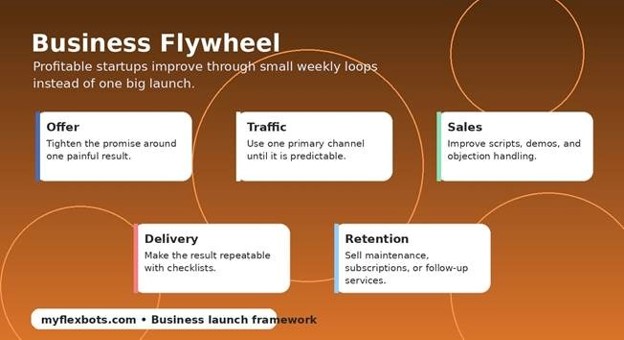
A business becomes real when you start selling. Here is a lean 30-day launch plan you can apply to most of the best business ideas 2026 in this guide.
Days 1-3: Choose One Customer Segment
Do not target “everyone.” Choose one group: salon owners, real estate agents, Shopify stores, parents of young children, busy homeowners, restaurants, tutors, clinics, or small contractors.
Write down their top five pains, where they spend time online, what they already buy, and who they trust.
Days 4-7: Research Competitors and Gaps
Study 10 competitors. Look at pricing, reviews, packages, guarantees, website copy, social comments, and weak points. You are not copying them. You are looking for gaps.
Common gaps include poor response time, unclear pricing, bad photos, no guarantee, weak onboarding, generic messaging, and lack of specialization.
Days 8-10: Create the Starter Offer
Write a one-page offer:
- Who it is for
- Problem it solves
- What is included
- What is not included
- Timeline
- Price or starting price
- Guarantee or risk reversal
- Next step to book or buy
Days 11-15: Build Proof Assets
If you have no clients, create proof through demos, audits, samples, before-and-after examples, walkthrough videos, checklists, or a small pilot.
For example, an AI automation agency can record a demo showing how inquiry routing works. A content studio can publish sample edits. A cybersecurity service can create a “10-point small business security checklist.”
Days 16-23: Outreach and Traffic
Use one primary channel first. Beginners spread themselves too thin. Choose cold email, LinkedIn, Instagram, TikTok, Google Business Profile, SEO, partnerships, or local networking.
Send direct, specific messages. Avoid spam. Mention the problem, the result, and a small next step.
Example: “I noticed your clinic receives a lot of Instagram inquiries. I help clinics organize and respond to inquiries faster with a simple AI-assisted follow-up system. Want me to send a 2-minute demo?”
Days 24-30: Close, Deliver, Improve
Close one to three small customers. Deliver manually if needed. Track every objection and every delivery step. Use those notes to improve the offer, price, onboarding, and sales page.
💡 Quick Hack: After every call, write down the exact words the prospect used to describe their problem. Use that language in your headline, offer, FAQ, and ads. Customers write better copy than marketers do.
Marketing Channels That Work for New Businesses
The channel you choose depends on the buyer. A B2B service may grow faster through LinkedIn, cold email, partnerships, and SEO. A visual consumer product may grow through Instagram, TikTok, Pinterest, influencers, and marketplaces. A local service needs Google Business Profile, local SEO, reviews, calls, and neighborhood referrals.
SEO
SEO is slow but powerful. It works best when people already search for the problem. Build service pages, comparison articles, pricing guides, local pages, and troubleshooting posts. Link internally to related content on myflexbots, including your guide on how to grow on Instagram and your coverage of biggest tech trends 2026.
Social Media
Social works best when the topic is visual, educational, emotional, or identity-driven. Do not post random graphics. Show transformations, mistakes, behind-the-scenes work, proof, customer questions, and practical tips.
Partnerships
Partnerships can outperform ads for service businesses. A home maintenance company can partner with real estate agents. A bookkeeping service can partner with web agencies. A pet service can partner with groomers and vets.
Paid Ads
Paid ads are useful after the offer converts organically. Do not use ads to fix a weak offer. Use them to scale a proven message.
Common Mistakes to Avoid
The biggest mistake with best business ideas 2026 is assuming trend equals demand. A trend is only useful when you can turn it into a clear paid result for a reachable buyer.
Mistake 1: Starting Too Broad
A broad business is harder to market. “Digital agency” is vague. “Google Ads for dental clinics” is easier to understand. “AI automation” is vague. “AI follow-up system for real estate leads” is clearer.
Mistake 2: Spending Before Selling
Do not spend heavily on branding, inventory, office space, or custom software before testing demand. Spending feels productive, but selling proves reality.
Mistake 3: Copying Competitors Without Understanding the Buyer
Competitors may be successful for reasons you cannot see: relationships, reputation, ad budgets, staff, location, or years of trust. Study them, but build your own buyer insight.
Mistake 4: Underpricing and Overdelivering
A low price with unlimited scope creates burnout. Set boundaries. Offer packages. Charge for extras. Explain what is included and what costs more.
Mistake 5: Ignoring Operations
A business with leads but poor delivery will collapse. Build checklists, templates, onboarding forms, refund rules, response times, and quality checks early.
Advanced Tips and Next-Level Hacks
Once your idea is validated, use these advanced moves to make it stronger. These are especially useful if you are comparing best business ideas 2026 and want an edge before competitors crowd the space.
Turn Services Into Productized Packages
A productized service has a fixed promise, fixed scope, fixed timeline, and fixed process. It is easier to sell and easier to delegate.
Example: “Small Business Cybersecurity Setup in 7 Days” is more productized than “IT consulting.”
Build a Proof Library
Create a folder of screenshots, testimonials, before-and-after examples, customer questions, case studies, demos, and short videos. Proof compounds. Every sale becomes easier when prospects can see evidence.
Add Recurring Revenue Early
Look for maintenance, reporting, optimization, support, refills, subscriptions, community access, or monthly check-ins. Recurring revenue gives you breathing room.
Use AI for Speed, Not Laziness
AI can help draft proposals, summarize calls, generate SOPs, analyze reviews, create content briefs, and automate workflows. It should not replace judgment, ethics, or customer understanding.
Create a Narrow “Beachhead” Market
Dominate one small niche before expanding. Become known for one result. Once you have proof, you can widen the offer.
💡 Quick Hack: Create a “minimum viable case study.” Even if your first client is discounted, document the starting problem, action steps, final result, timeline, and quote. One clean case study can sell more effectively than 30 generic social posts.
Troubleshooting and Maintenance Guide
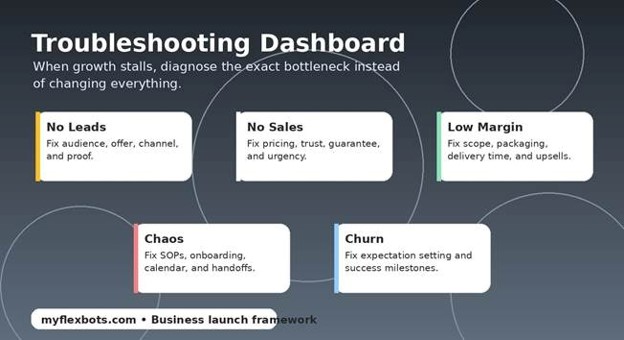
Even the best business ideas 2026 can stall if the offer, channel, pricing, or operations are broken. Use this section as a diagnostic tool.
Problem: You Are Getting No Leads
Check your audience first. Are you targeting a group that has the problem and budget? Then check your offer. Is the result clear in one sentence? Finally, check your channel. Are your buyers active there?
Fixes:
- Narrow the audience.
- Rewrite the headline around the pain.
- Add proof or a demo.
- Send more direct outreach.
- Ask past contacts for introductions.
- Publish content that answers buying questions.
Problem: People Show Interest but Do Not Buy
Interest without payment usually means the value, urgency, trust, or price is unclear.
Fixes:
- Offer a smaller paid pilot.
- Add a guarantee or clear success milestone.
- Show examples and testimonials.
- Explain the cost of doing nothing.
- Follow up professionally.
- Remove confusing options.
Problem: You Are Busy but Not Profitable
This happens when pricing is too low, scope is too wide, delivery takes too long, or costs are hidden.
Fixes:
- Track time per task.
- Remove low-value tasks from the package.
- Charge setup fees.
- Increase prices for new customers.
- Create add-ons.
- Build templates and SOPs.
Problem: Customers Keep Asking for Extras
Scope creep is a packaging problem. The customer may not be wrong. Your boundaries may be unclear.
Fixes:
- Add a “what is included” section.
- Add a “what is not included” section.
- Use change-order pricing.
- Confirm deliverables in writing.
- Offer higher-tier packages for advanced needs.
Problem: You Cannot Keep Up With Delivery
Growth exposes weak systems. If you are doing everything from memory, quality will drop.
Fixes:
- Create onboarding forms.
- Build delivery checklists.
- Use templates.
- Batch similar work.
- Hire contractors for repeatable tasks.
- Review quality before delivery.
Problem: Customers Leave After One Purchase
Retention usually fails because expectations were vague or the next step was never offered.
Fixes:
- Set success milestones.
- Schedule follow-up reviews.
- Offer maintenance plans.
- Send monthly reports.
- Ask what else they need after delivery.
- Build a simple customer success checklist.
Frequently Asked Questions
What are the best business ideas 2026 for beginners with a small budget?
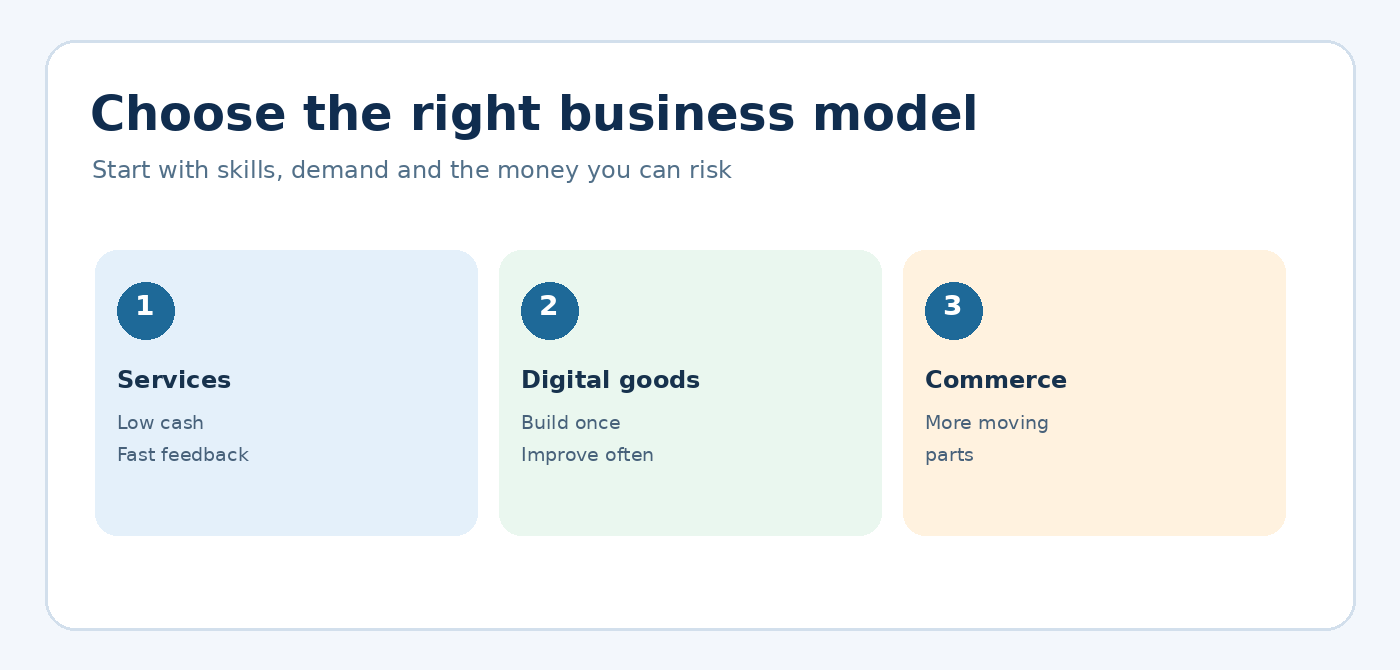
The best beginner options are service-based businesses because they require less upfront capital than inventory-heavy models. AI automation setup, content repurposing, local lead generation, bookkeeping support, virtual operations, pet services, and reputation management can all start lean if you focus on one buyer and one offer.
Which online business is most profitable in 2026?
Profit depends on margin, acquisition cost, retention, and delivery complexity. Digital products and software can have high margins, but they require strong distribution. B2B services can become profitable faster because you can sell before building a large audience.
Is AI automation a good business to start in 2026?
Yes, but only if you solve real operational problems. Many companies use AI casually but need help turning it into safe, repeatable workflows. Start with narrow use cases like lead follow-up, reporting, customer support, content repurposing, or admin automation.
What business can I start from home in 2026?
Home-based options include content editing, AI workflow consulting, online tutoring, bookkeeping, templates, e-commerce management, virtual operations, social media management, SEO writing, digital products, and remote customer support services. Choose something that can be sold online and delivered with simple tools.
How do I know if my business idea will work?
You do not know until you test it. Speak with prospects, create a small offer, ask for a deposit or pilot, and track real buying behavior. A business idea is stronger when people take action before you build the full version.
Should I start with a product or service business?
Start with a service if you have limited capital and need cash flow quickly. Start with a product if you understand sourcing, fulfillment, branding, and demand. Many smart founders begin with a service, learn the market, then turn repeated problems into products, templates, or software.
Conclusion: Choose the Idea You Can Execute Consistently
The best business is not always the trendiest business. It is the one where you can reach a real buyer, solve an urgent problem, deliver profitably, and improve every week. Use this guide to shortlist ideas, score them honestly, validate demand, and launch a lean offer before spending heavily.
If you are choosing from these 2026 opportunities, start with the idea that gives you the clearest customer, fastest path to proof, and strongest personal edge. Which business idea from this guide would you test first, and what customer would you target?
editor's pick
latest video
news via inbox
Nulla turp dis cursus. Integer liberos euismod pretium faucibua