Dropshipping for beginners: A Practical Start-to-Scale Guide
A dropshipping store can be launched quickly, but a trustworthy, profitable one is not built by copying a product, adding a large markup, and buying random ads. The hard work is choosing a real customer problem, verifying the supplier, understanding the numbers, and controlling the experience you do not physically fulfill.
This guide to dropshipping for beginners replaces the “easy passive income” pitch with a practical operating plan. You will learn how to research products, calculate a safe selling price, test suppliers, build a conversion-focused store, launch marketing, handle fulfillment failures, and scale only after the economics are proven.
The result should feel less like a disposable online shop and more like a small retail brand: clear promise, honest policies, useful support, dependable delivery, and disciplined measurement.
What Is Dropshipping? Featured Snippet Answer
| Direct Answer: dropshipping for beginners is an ecommerce model where a store markets and sells products without holding inventory. After a customer orders, the retailer sends the order to a supplier, who ships it to the buyer. Success depends on product demand, reliable fulfillment, clear margins, trustworthy policies, and strong customer service. |
How the Business Model Actually Works
- A shopper finds your offer. Traffic may come from search, social content, influencers, email, marketplaces, or paid advertising.
- The shopper pays your store. You collect the retail price through your payment processor and become responsible for the customer experience.
- You place or transmit the supplier order. The supplier receives the product, variant, address, and shipping method.
- The supplier fulfills the package. The supplier or agent picks, packs, labels, and hands the parcel to a carrier.
- You manage communication and problems. You send tracking updates, answer questions, process refunds, replace damaged items, and resolve chargebacks.
The customer buys from you—not from your supplier. That means delayed tracking, confusing instructions, low-quality packaging, missing accessories, and weak returns become your problem even when the supplier caused them.
Essential Tools & Materials Breakdown
You can validate a product with a lean stack. The goal is not to purchase every app before the first sale; it is to spend enough to verify quality, process a real order, collect reliable data, and protect customers when something fails.
| Tool or Material | Lean Cost | Skill Level | What It Must Prove |
| Domain and business email | $12–$35/year | Beginner | A credible name and customer-facing contact channel. |
| Ecommerce platform or hosted cart | $0–$39/month | Beginner | Products, checkout, taxes, policies, orders, and mobile usability. |
| Product samples | $30–$150 | Beginner | Quality, instructions, packaging, delivery time, and actual dimensions. |
| Supplier marketplace or directory | $0–$99/month | Beginner | Supplier access, order history, shipping options, and communication. |
| Design and image editing | $0–$30/month | Beginner | Clean brand assets, original diagrams, and consistent product media. |
| Analytics and behavior tools | $0–$30/month | Intermediate | Traffic sources, funnel leaks, conversion events, and page behavior. |
| Customer support inbox | $0–$50/month | Beginner | Organized replies, templates, tags, response times, and issue tracking. |
| Initial product test budget | $150–$500 | Intermediate | Enough traffic or creator output to test message and conversion. |
| Refund and reship reserve | $100–$300 | Beginner | Cash available to solve customer problems before payouts settle. |
| 💡 Quick Hack: Set a validation ceiling before you begin. A lean first test might be capped at $300–$700, including samples, basic store costs, a small traffic test, and a refund reserve. Do not add apps unless a real bottleneck appears. |
Set a Goal and Build the Unit Economics First
The first job in dropshipping for beginners is not choosing a logo. It is deciding what the first test must prove. A useful 30-day goal might be: “Confirm that one audience will buy one offer at a contribution margin that leaves room for support, refunds, and future acquisition.”
Start with a simple unit-economics sheet. For every order, list the selling price, product cost, shipping cost, payment processing, platform or app allocation, advertising or creator cost, expected refund loss, and customer service allowance.
Use Contribution Margin, Not Revenue
Revenue can look impressive while the store loses money. Contribution margin shows how much remains after the variable costs required to produce that sale.
| Simple Formula: Contribution margin = selling price − product cost − supplier shipping − transaction fees − acquisition cost − expected refunds/reships. |
Example: A product sells for $49. Product and supplier shipping cost $18, payment fees are $2, acquisition averages $14, and the refund/reship allowance is $3. The contribution margin is $12 before fixed overhead and tax. That is a useful business; the $49 revenue number alone is not.
| 💡 Quick Hack: Use a “three-times landed cost” screen only as a fast filter, not a final price. If product plus shipping is $15, a $45–$55 retail range may leave testing room. Then verify the real margin with fees, refunds, and acquisition included. |
Choose a Niche You Can Explain in One Sentence
A niche is not merely “pets,” “beauty,” or “home.” It is a reachable audience with a recurring situation, a reason to care, and products that fit a coherent promise.
Better niche statements sound like this: “Practical travel organizers for parents flying with toddlers,” “low-mess enrichment products for indoor cats,” or “desk-comfort accessories for remote workers in small spaces.” Each statement shapes product selection, content, visuals, bundles, and customer language.
Problem intensity: Does the product remove frustration, save time, reduce risk, improve comfort, or create a visible result?
Audience reachability: Can you find the audience through searchable questions, communities, creators, publications, or clear ad interests?
Merchandising depth: Can the first product lead naturally to bundles, accessories, replacements, or repeat purchases?
Operational safety: Avoid early products with high breakage, sizing complexity, safety claims, restricted materials, trademark risk, or expensive returns.
Use the SBA guide to market research and competitive analysis as a structured check: identify the customer, estimate demand, compare alternatives, and write down how your offer will be different.
Research Products with a Scorecard
Product selection in dropshipping for beginners should be evidence-driven. Viral views can reveal curiosity, but they do not prove purchase intent, margin, reliable fulfillment, or low return risk.
Build a shortlist of 10–20 products, then score each one from 1 to 5. Eliminate weak products before spending on samples or ads.
| Criterion | What Good Looks Like | Red Flag |
| Clear benefit | Understood in seconds; easy before/after or use case | Needs a long explanation before value is visible |
| Landed margin | Room for support, fees, returns, and traffic | Profit depends on perfect delivery and zero refunds |
| Shipping practicality | Compact, durable, trackable, sensible delivery options | Heavy, fragile, oversized, liquid, magnetic, or restricted |
| Quality consistency | Multiple suppliers, stable specifications, sample matches listing | Frequent review complaints about defects or missing parts |
| Creative depth | Several hooks, demos, audiences, and problem angles | Only one repetitive viral video concept |
| Competition gap | Better bundle, instructions, guarantee, audience, or positioning | Identical offer from dozens of stores and marketplaces |
| 💡 Quick Hack: Reverse-search the supplier images and search the exact product phrase. If every result uses the same photos, same copy, same discount, and same promise, the product may still sell—but you need original media, a tighter audience, or a stronger bundle to escape commodity pricing. |
For SEO-led product and content research, use MyFlexBots’ guide on how to do keyword research. Look for problem phrases, comparison searches, “how to use” questions, replacement terms, and audience modifiers—not volume alone.

Vet Suppliers Like an Operations Manager
Supplier selection is the most important risk-control decision in the model. A supplier can have an attractive catalog and still fail on inventory accuracy, variant handling, tracking speed, packaging, replacements, or communication.
Send a Specific Supplier Questionnaire
Where is the product stored, and which countries can ship from domestic or regional warehouses?
What are the processing-time range and typical delivery range for each target country?
Which carriers and tracked services are used? When does tracking normally begin updating?
How often does inventory sync, and what happens if a paid order becomes unavailable?
Can invoices, marketplace branding, QR codes, or unrelated promotions be removed from the package?
What evidence is required for a damaged, missing, wrong, or defective item?
Who pays for reships and refunds when the supplier is at fault?
Can the supplier support custom inserts, branded packaging, bundles, or product inspection later?
Order a Sample Through the Normal Channel
Do not request a hand-picked “best sample” from a sales representative. Place a normal order to a real address and record the processing time, first tracking event, delivery time, package condition, product quality, instructions, smell, fit, dimensions, and included accessories.
| Pro-Tip: Mystery-shop the supplier twice: once to your own address and once to a friend in another region. One clean delivery can be luck. Two ordinary orders reveal whether processing and tracking are repeatable. |
Keep a backup supplier for any winning product. Match the specifications before activating the backup; visually similar products may use different materials, dimensions, connectors, colors, or packaging.
Build an Offer, Not a Product Listing
Customers can often find the same item elsewhere. Your advantage comes from making the buying decision easier and the outcome more reliable.
Positioning: Name the audience, problem, and desired outcome in plain language.
Bundle: Combine compatible items or include a guide, checklist, replacement part, or storage accessory.
Proof: Use your own sample photos, a real demonstration, measurements, comparison tables, and honest limitations.
Risk reversal: Create a clear return, damage, and satisfaction process that you can afford to honor.
Post-purchase help: Provide setup instructions, troubleshooting, care guidance, and proactive delivery updates.
Write the product page around decisions the customer must make: Will it fit? What is included? How is it used? How long will delivery take? What happens if it arrives damaged? Is the result realistic? What makes this version or bundle worth the price?
Build a Fast, Trustworthy Store
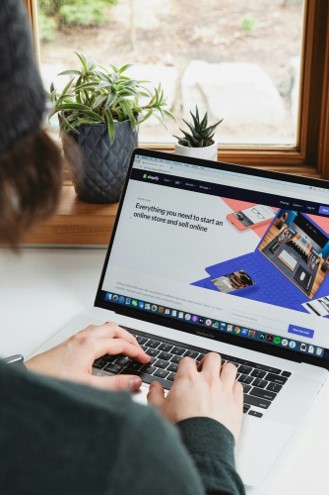
A major lesson in dropshipping for beginners is that visual polish cannot compensate for missing trust. Your store must explain who you are, what the buyer receives, when it ships, how returns work, and how support can be reached.
Minimum Trust Pages
Contact page with a monitored email address and realistic response window.
Shipping and delivery policy with processing time, estimated transit ranges, tracking behavior, and delay handling.
Returns and refunds policy with eligibility, time window, condition requirements, exclusions, and contact steps.
Privacy policy, terms, payment information, and any required business disclosures for your jurisdiction.
About page that explains the audience, quality process, and service promise without inventing a fake history or team.
For U.S. orders, review the FTC’s Mail, Internet, or Telephone Order Merchandise Rule. It explains the need for a reasonable basis for shipping promises and the steps sellers must take when a shipment cannot be sent on time. Sellers elsewhere should check the consumer, ecommerce, tax, and privacy rules that apply to their own country and customer locations.
Product Page Structure That Reduces Doubt
- Benefit-led headline and one-sentence explanation.
- Original product media showing scale, use, included parts, and realistic results.
- Three to five outcome-focused benefits—not copied supplier features.
- Variant, dimensions, compatibility, material, care, and safety information.
- What is included in the package.
- Delivery estimate and a direct link to the full shipping policy.
- Returns summary and a direct link to the full policy.
- Frequently asked questions based on real objections.
- Reviews or testimonials only when authentic and permitted.
On product pages where customers can buy, Google documents merchant listing structured data for details such as offers, availability, shipping, and returns. Mark up only information that is visible, accurate, and maintained on the page.
| 💡 Quick Hack: Launch with one tightly built landing page and a small supporting catalog instead of importing 100 products. One focused offer is easier to test, explain, photograph, support, and improve. |
Price for Reality, Not for a Fake Discount
Pricing should support the promised experience. A thin margin forces bad decisions: slow support, refusal to refund, low-quality shipping, and endless couponing.
Create three price views: the ordinary selling price, a bundle price, and the lowest promotional price that still protects contribution margin. Avoid permanent “70% off” pricing that is not based on a genuine former price or lawful comparison.
Landed cost: Product, supplier shipping, packaging, and any inspection or agent fee.
Selling fees: Payment processing, marketplace fees, currency conversion, and transaction fees.
Acquisition cost: Ads, creator commissions, affiliate payouts, or content production.
Failure allowance: Refunds, chargebacks, damaged items, reships, and lost parcels.
Service allowance: Support software and the time required to handle questions and problems.
If the product cannot support a sensible margin, improve the bundle, negotiate cost, raise perceived value with better proof and service, choose a closer warehouse, or reject it. Do not assume scale will rescue weak economics.
Build and Test the Order Workflow
Before public launch, complete a test order from a phone using a real payment method. The workflow must be tested from checkout through delivery—not only until the “thank you” page.
- Place an order using the same checkout a customer will see.
- Confirm tax, shipping, discount, currency, and payment behavior.
- Check the order confirmation email for accurate product, variant, address, and support information.
- Transmit the order to the supplier and verify that no field is lost or mapped incorrectly.
- Confirm the supplier processing status and first tracking update.
- Review each automated delivery email and tracking page.
- Receive and inspect the package, then simulate a return or damage claim.
- Record the exact steps in a short operating procedure.
| Pro-Tip: Create exception tags before launch: address problem, supplier out of stock, no tracking update, delayed in transit, delivered not received, damaged, wrong item, cancellation, refund, and chargeback. Clear categories make support faster and reveal recurring supplier failures. |
Launch with a Controlled Traffic Test
Do not judge a product from three visits, and do not spend blindly until a sale appears. Choose a test method, define the budget or output, and decide what evidence would justify another round.
Option A: Organic Validation
Publish demonstrations, comparisons, setup tips, mistakes, use cases, and customer questions.
Partner with small creators whose audience closely matches the product problem.
Answer search-led questions with useful articles, short videos, and product-page FAQs.
Collect email subscribers with a practical guide, quiz, checklist, or launch offer.
Option B: Paid Validation
Test multiple hooks before changing the entire product or landing page.
Use a daily limit you can afford to lose while collecting data.
Separate creative failure from page failure: strong click-through with weak conversion suggests a page, offer, trust, or audience mismatch.
Pause quickly when the data shows a broken checkout, misleading creative, or unaffordable acquisition cost.
| Pro-Tip: Use a 10–10–3 creative sprint: list 10 customer pains, 10 desired outcomes, and 3 proof formats such as demonstration, comparison, and testimonial-style explanation. Combine them into several distinct ads or posts instead of making tiny edits to one concept. |
For a broader channel plan, connect this launch section to MyFlexBots’ digital marketing strategies for 2026 and choose one primary acquisition channel plus one owned channel, such as email, that you can keep building.
Read the Funnel and Improve One Bottleneck
Your analytics should tell a story. Do not optimize everything at once; find the largest credible leak and run one meaningful change.

| Signal | Likely Meaning | First Checks |
| Low click-through | The hook, audience, visual, or promise is weak | Creative clarity, first frame, headline, audience fit |
| Clicks but few product views | Slow load, broken link, or landing mismatch | Mobile speed, redirect, page load, message continuity |
| Views but few add-to-carts | Weak offer, price, proof, relevance, or product explanation | Benefit, media, bundle, shipping, compatibility, trust |
| Add-to-carts but few checkouts | Unexpected cost or cart friction | Shipping price, coupon field, cart design, delivery timing |
| Checkout starts but few purchases | Payment, trust, or technical problem | Payment methods, errors, taxes, address fields, mobile checkout |
| Sales but poor cash result | Acquisition, shipping, refunds, or fees are too high | Contribution margin by product, country, channel, and creative |
Common Mistakes to Avoid
Most failures in dropshipping for beginners are not caused by one secret algorithm change. They come from five controllable errors that compound until the store cannot afford to serve the customer.
Mistake 1: Choosing a Product Because It Looks Viral
Views measure attention, not margin or fulfillment quality. Validate the audience problem, competition, shipping practicality, supplier consistency, and customer questions before paying for traffic.
Mistake 2: Copying Supplier Media and Descriptions
Copied pages look interchangeable and often omit crucial details. Order the item, create original photos or demonstrations, measure it, document what is included, and rewrite the page around actual buyer decisions.
Mistake 3: Hiding Long Delivery Times
Optimistic shipping claims may create a quick conversion but also produce cancellations, support tickets, disputes, and policy risk. Give realistic processing and delivery ranges, explain tracking behavior, and contact customers early when delays occur.
Mistake 4: Scaling Revenue Before Proving Contribution Margin
A campaign can generate sales and still drain cash. Calculate margin after acquisition, refunds, chargebacks, payment fees, shipping changes, and support. Scale the profitable combination of product, country, channel, and creative—not gross store revenue.
Mistake 5: Treating Support as an Afterthought
Third-party fulfillment increases the need for communication. Create templates, response targets, order tags, escalation rules, and a refund reserve before volume rises.
| 💡 Quick Hack: Write five support macros before launch: “Where is my order?”, “Tracking has not updated,” “My item arrived damaged,” “I received the wrong variant,” and “I want to cancel.” Personalize the first sentence, then use the template to respond consistently. |
Advanced Tips and Next-Level Hacks
Once dropshipping for beginners produces consistent orders and acceptable margins, the next step is not adding random products. Improve the offer, supply chain, retention, and cash control around what already works.
- Increase Average Order Value with Useful Bundles
Bundle products that solve the same job, not unrelated items added for a higher cart total. Show what each component does, the bundle saving, and whether the customer can buy replacements separately.
- Use Two Suppliers and a Stock Buffer
Keep a verified backup for the winning SKU and ask both suppliers for regular inventory updates. When demand becomes predictable, a small batch held by an agent or fulfillment partner can improve processing time, branding, inspection, and shipping consistency.
| Pro-Tip: Set an inventory warning level based on sales velocity and supplier replenishment time. Do not wait for “out of stock.” If the last seven days average 10 orders per day and replenishment needs 14 days, a 140-unit pipeline is only the starting coverage—not a comfortable buffer. |
- Build a Creative Library, Not One Winning Ad
Tag every creative by audience, pain, promise, format, proof, length, opening hook, and offer. When performance changes, you can see which message family still works instead of starting from zero.
- Automate Updates but Keep Human Escalation
Automate order confirmation, tracking, delivery guidance, review requests, and simple status replies. Keep human review for address problems, safety concerns, refunds, chargebacks, repeated delays, and emotionally frustrated customers.
- Move Toward Branded Fulfillment
After stable demand, ask about quality inspection, custom inserts, plain packaging, branded packaging, custom variants, and private labeling. Brand investment should follow proof of demand; it should not be used to hide an untested product.
- Control Cash Flow During Growth
Fast growth can create a cash gap because suppliers may require immediate payment while card processors hold or delay payouts. Maintain a reserve, track pending payouts, monitor chargebacks, and avoid committing all available cash to ads.
| 💡 Quick Hack: Maintain separate balances for supplier payments, refunds/reships, tax, and operating spend. A store bank balance is not the same as spendable profit. |
Troubleshooting & Maintenance Guide
Troubleshooting dropshipping for beginners is easier when each problem is tied to a stage of the funnel or fulfillment process. Diagnose the stage first, then change the smallest number of variables needed to test the cause.
| Problem | Likely Causes | Corrective Action |
| Traffic is almost zero | No distribution plan, weak content output, narrow targeting, indexing issues | Pick one channel, publish or test consistently, verify tracking and indexing, and measure impressions before conversions. |
| Traffic arrives but nobody adds to cart | Wrong audience, weak benefit, poor media, price shock, unclear shipping | Compare ad promise with page headline; improve proof, measurements, bundle, delivery clarity, and mobile speed. |
| Customers start checkout but do not pay | Unexpected shipping/tax, payment errors, missing methods, trust concern | Test on multiple devices, inspect errors, simplify fields, show total cost earlier, and offer appropriate local payment methods. |
| Tracking does not update | Label created before carrier scan, bad tracking, processing delay | Confirm shipment with supplier, explain the expected first scan, set a deadline for reship/refund, and stop using repeat offenders. |
| Delivery takes longer than promised | Supplier backlog, carrier delays, customs, unrealistic estimate | Notify customers before they ask, offer choices where required, revise future estimates, and move volume to a better route. |
| Damage or wrong item rate rises | Poor packing, variant mapping, weak quality control | Collect photos, calculate defect rate by supplier/SKU, demand corrective action, inspect batches, or change supplier. |
| Refunds are high | Misleading creative, poor quality, compatibility issue, late delivery | Tag refund reasons, fix the dominant cause, improve expectation-setting, and remove products that cannot be stabilized. |
| Chargebacks increase | Slow replies, confusing billing, delivery disputes, weak records | Use clear descriptors, preserve order and tracking evidence, respond quickly, and make refunds easier than unnecessary disputes. |
Maintenance Schedule
| Cadence | Actions |
| Daily | Review paid orders, failed payments, supplier exceptions, tracking gaps, urgent support, and ad spend limits. |
| Weekly | Check conversion funnel, margin by channel, stock status, delivery performance, refund reasons, and creative fatigue. |
| Monthly | Reorder samples if suppliers change, audit policy accuracy, test checkout, review app costs, update FAQs, and calculate true profit. |
| Quarterly | Re-vet suppliers, review legal and platform requirements, test backup fulfillment, refresh product media, and decide whether to scale, improve, or retire each SKU. |
| Pro-Tip: Track supplier performance like a carrier scorecard: processing time, first tracking scan, delivery time, damage rate, wrong-item rate, stockouts, refund cooperation, and response time. Replace opinions with monthly numbers. |

Frequently Asked Questions
How much money is needed to start dropshipping?
A careful first validation can often be planned in the $300–$700 range, but the required amount varies. Budget for a domain, store, samples, basic tools, a traffic or creator test, supplier payments, and a refund/reship reserve. Starting with less is possible through organic content, but it usually takes more time and still requires money to fulfill orders and solve problems.
Is dropshipping legal?
The business model is generally legal, but the seller must follow the laws and platform rules that apply to products, advertising, consumer rights, privacy, taxes, shipping promises, refunds, intellectual property, and restricted goods. Do not sell counterfeit items, misuse trademarks, make unsupported health or safety claims, or hide material delivery information. Get professional advice for your jurisdiction when needed.
Can a store start without paid advertising?
Yes. Organic short-form video, useful search content, micro-creators, communities, partnerships, email, and marketplace demand can validate an offer. The tradeoff is time and consistent output. Organic traffic is not automatically free because content production, samples, creator products, and labor still have a cost.
How do you find a reliable supplier?
Shortlist suppliers with established order history, clear product specifications, responsive communication, realistic processing times, tracked shipping, and workable problem-resolution terms. Ask a detailed questionnaire, order normal samples, test delivery to more than one region, and maintain a verified backup.
How long does it take to make the first sale?
A first sale may happen quickly or take weeks, depending on audience access, offer quality, traffic volume, trust, pricing, and product demand. A better milestone is a completed test cycle: enough qualified traffic to identify the largest funnel leak and enough fulfillment experience to confirm that customers can be served reliably.
Is dropshipping for beginners still profitable in 2026?
It can be profitable when the store creates real value beyond access to a commodity product. That value may be better positioning, original media, faster local fulfillment, a useful bundle, clearer instructions, responsive support, honest policies, or stronger customer acquisition. It is not reliably profitable when margins are thin, delivery promises are vague, and the entire strategy depends on copied creative and impulse traffic.
Conclusion: Build a Retail System, Not a Shortcut
The durable approach to dropshipping for beginners is straightforward: validate a customer problem, select products with operational discipline, test suppliers through real orders, price for failures as well as successes, build trust before buying traffic, and improve the largest bottleneck with data.
Start with one audience, one offer, one verified supplier, and one measurable traffic plan. Document the workflow, protect customers when fulfillment fails, and scale only when contribution margin and delivery quality hold up under ordinary conditions—not just during a lucky week.
Which part of your launch needs the most work right now: product research, supplier vetting, store trust, traffic, or fulfillment? Share the bottleneck in the comments so the next MyFlexBots guide can solve the problem in detail.
editor's pick
latest video
news via inbox
Nulla turp dis cursus. Integer liberos euismod pretium faucibua