Trending Social Media Trends 2026: What Actually Works
Social media teams are being asked to publish more, move faster, use AI, follow every platform update, and still prove revenue. That pressure creates busy calendars but not necessarily better results. This guide turns trending social media trends 2026 into a practical operating plan you can use to earn attention, build trust, and connect content to business outcomes.
You will learn which shifts deserve investment, which popular tactics are mostly noise, how to build a repeatable content system, and how to troubleshoot weak reach or low conversion. The goal is not to predict every viral moment. It is to create a strategy strong enough to benefit from change without being controlled by it.
Research note: This guide reflects current 2026 reports and platform guidance from DataReportal, Sprout Social, Hootsuite and TikTok for Business.
What are the biggest social media trends in 2026?
The biggest 2026 shifts are social search, creator-style authenticity, serialized short-form video, AI-assisted production with human quality control, smaller trusted influencers, community-led engagement, social commerce, employee voices, private communities, and measurement tied to leads, sales, retention, and customer insight.
Essential tools, resources and budget breakdown
This is not a construction project, but it still needs the right materials: research inputs, production tools, review controls and measurement. Start lean. Upgrade only when a bottleneck is costing more than the tool.
| Resource | What it does | Typical monthly cost | Skill level |
| Native platform analytics | Tracks reach, retention, searches and conversions | $0 | Beginner |
| Scheduling platform | Plans posts, approvals and reporting | $0-$250+ | Beginner |
| Design and editing tools | Creates carousels, graphics and short videos | $0-$40 | Beginner |
| Social listening | Finds questions, sentiment and emerging topics | $0-$500+ | Intermediate |
| AI assistant | Drafts variations, summaries and repurposed assets | $0-$30+ | Intermediate |
| Link tracking and CRM | Connects social clicks to leads and revenue | $0-$100+ | Intermediate |
| Creator budget | Funds UGC, expert clips or nano-creators | $100-$5,000+ | Intermediate |
| Lighting and microphone | Improves phone-video clarity and sound | $40-$250 one time | Beginner |
💡 Quick Hack: Before buying software, create a one-page measurement sheet in Google Sheets. Track post format, topic, hook, reach, average watch time, saves, profile visits, leads and sales. Two months of clean manual data will reveal what automation is actually worth paying for.
Build a trend filter before you build a content calendar
The fastest way to waste a quarter is to treat every trend as a command. A useful trend must match your audience, your offer, your team capacity and a measurable business objective. Score each idea from one to five across those four factors. Anything below 14 out of 20 belongs in a test queue, not the main calendar. This filter turns the year’s fast-moving trends into controlled experiments rather than expensive distractions.
Define the business job: awareness, qualified traffic, lead generation, sales, retention or customer support.
Define the audience behavior: what they search, save, share, compare, complain about or buy.
Define the repeatable format: tutorial, comparison, reaction, case study, founder diary, customer story or live demonstration.
Define the proof: screen recording, result, customer quote, experiment, price breakdown or expert explanation.
Define the success threshold before publishing, not after seeing the numbers.
Pro-Tip: Use a 70/20/10 split: 70% proven topics and formats, 20% adjacent experiments, and 10% high-risk creative tests. This protects consistency while preserving room for discovery.
Treat social platforms as search engines
People increasingly use social feeds to find restaurants, software, product reviews, tutorials, travel ideas and professional advice. That means your content must be understandable before it is entertaining. A clever video with no clear subject may earn impressions yet fail to attract qualified viewers. For that reason, trending social media trends 2026 must be planned around discoverable questions, not captions written after production.
How to optimize a post for social search
Start with one specific query, such as “best CRM for a five-person agency” rather than “business tools.”
Say the main phrase naturally in the opening seconds of a video.
Place the topic in on-screen text and the first line of the caption.
Answer the question immediately, then add context, examples and exceptions.
Use three to five tightly related hashtags rather than a cloud of broad tags.
Write image alt text where the platform supports it.
Reply to follow-up questions with new posts so one query becomes a content cluster.
💡 Quick Hack: Mine platform search suggestions. Type the first half of a customer question into TikTok, YouTube, Instagram, Pinterest and Reddit search. Record the auto-complete phrases, then group them into beginner, comparison and purchase-intent topics.
Replace random posts with serialized content
A series trains the audience to recognize what comes next. It also lowers production stress because the structure stays fixed while the example changes. Current audience research highlights demand for original series and brand interaction, making serialized content one of the most practical trending social media trends 2026 for teams with limited resources.
“Fix It in 60 Seconds” for troubleshooting content.
“We Tested It” for product or software comparisons.
“One Metric Monday” for analytics education.
“Behind the Build” for founder, maker or agency process.
“Customer Question of the Week” for search-driven answers.
“Before You Buy” for objections, trade-offs and honest limitations.
Give each series a visual cue, a consistent opening line and a clear episode number. Do not make every episode identical; keep the container familiar while changing the insight, story or demonstration.
Use AI as a production assistant, not a personality replacement
AI can speed up research, hook variations, caption drafts, transcripts, clipping and localization. The risk is sameness. As platforms and audiences become more sensitive to repetitive, low-value synthetic content, human judgment becomes more valuable—not less. The durable lesson from trending social media trends 2026 is that speed matters only when human review protects usefulness and trust.
Use AI to summarize customer interviews, but keep the customer’s actual language.
Generate ten hooks, then rewrite the strongest two in your brand voice.
Turn one webinar into clips, a carousel, an FAQ and an email—but give each format a native opening.
Use AI for first-pass subtitles and translations, then check names, numbers and context.
Keep a human review step for accuracy, originality, claims, tone and disclosure requirements.
💡 Quick Hack: Create a “banned phrases” list for your AI workflow. Remove vague openings such as “in today’s fast-paced world,” inflated claims, empty motivational language and repeated three-part sentences. This single checklist makes generated drafts sound more credible.
Make authentic proof the center of the creative
Polished branding still matters, but over-produced content can feel distant when the audience wants evidence. Behind-the-scenes footage, customer demonstrations, honest trade-offs and visible process reduce uncertainty. TikTok’s 2026 guidance emphasizes unfiltered stories and real process over curated perfection, while current reporting also shows growing interest in smaller creators with trusted communities.
Show the setup, not only the final result.
Explain what failed and what you changed.
Include price, time, difficulty and who the solution is not for.
Let employees or subject-matter experts speak in their natural voice.
Use customer footage with clear permission and disclosure.
Balance informal delivery with accurate claims and clean audio.
Pro-Tip: A phone video with excellent sound, specific information and visible proof usually outperforms an expensive video that says nothing new. Buy a simple microphone before buying a new camera.
Build a nano-creator and customer content engine
Large influencer campaigns can produce reach, but smaller creators often offer tighter audience fit, more natural comments and lower testing costs. Start with people who already understand the product: customers, employees, partners, local experts and niche creators. Within trending social media trends 2026, this shift toward smaller trusted voices gives modest budgets a realistic way to test creator marketing.
Choose one narrow audience segment and one product use case.
Recruit 10 to 25 creators whose content style already fits the use case.
Give them a clear brief with must-cover facts, prohibited claims and disclosure requirements.
Allow creative freedom in language, setting and story structure.
Pay fairly or provide a transparent value exchange; product alone is not always sufficient.
Track creator-level links, codes, assisted conversions and reusable content rights.
Repurpose the best assets into paid ads only when the agreement allows it.
💡 Quick Hack: Instead of asking for a generic testimonial, ask creators to record three separate clips: the problem before purchase, the first-use reaction, and the result after a defined period. That gives you a story arc and several reusable edits.
Turn community management into content and research
Comments and direct messages are not administrative leftovers. They are product research, objection research and content prompts. A brand that responds quickly and usefully can build more trust than a brand that publishes twice as often but ignores people. This community-first approach is one of the most defensible trending social media trends 2026 because it improves both content and customer experience.
Create response standards for questions, complaints, misinformation and praise.
Tag recurring questions by topic so they become future posts or FAQ updates.
Escalate product issues to the correct team instead of hiding them.
Invite knowledgeable customers into live sessions, private groups or beta programs.
Publish follow-up posts that credit the community question without exposing private information.
Design for zero-click value, then offer the next step
A social post should be useful even when the viewer never leaves the platform. Give the framework, comparison or answer in the post. Then make the call to action a logical continuation: download the template, view the full test, book an assessment, compare plans or start a trial.
Weak CTA: “Visit our website.”
Stronger CTA: “Download the 12-point audit checklist used in this video.”
Weak CTA: “Learn more.”
Stronger CTA: “See the full cost comparison, including the three hidden fees.”
This approach improves saves and shares while attracting clicks from people who already understand the value. It is especially important when platform algorithms reduce outbound distribution or users prefer to stay in-app.
Connect social commerce to education, not pressure
In-app shopping, product tagging, live demonstrations and conversational selling reduce friction, but convenience cannot replace trust. The best social commerce content helps people decide. It answers fit, use, price, delivery, returns, compatibility and alternatives before pushing checkout. Among trending social media trends 2026, social commerce works best when education lowers purchase risk before the checkout prompt appears.
Create comparison posts for different customer types.
Use live sessions to demonstrate setup and answer objections.
Build short product videos around one use case rather than a feature list.
Pin shipping, warranty and return answers near shoppable content.
Retarget viewers with proof or education, not the same sales message repeatedly.
Measure qualified attention and business impact
Reach is useful, but it does not tell you whether the right people paid attention. Build a measurement ladder that starts with content quality and ends with business value. This keeps trending social media trends 2026 connected to decisions rather than vanity reporting. A disciplined dashboard is what separates trending social media trends 2026 from temporary activity with no commercial value.
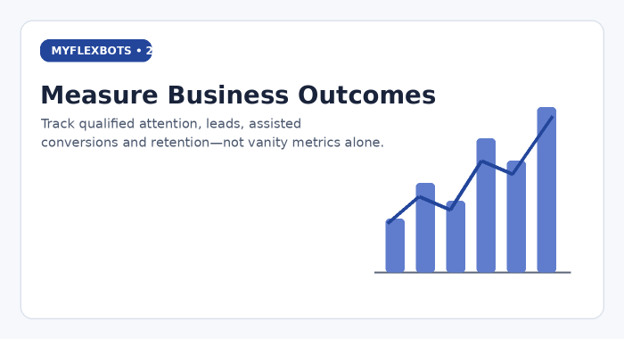
| Stage | Core metrics | What the metrics reveal |
| Attention | 3-second hold, average watch time, completion rate, carousel depth | Whether the hook and structure keep interest |
| Value | Saves, shares, meaningful comments, profile visits | Whether the content is useful or relevant |
| Intent | Link clicks, product views, branded searches, direct messages | Whether interest is moving toward action |
| Conversion | Leads, purchases, booked calls, assisted conversions | Whether social contributes to revenue |
| Retention | Repeat viewers, returning customers, community activity | Whether the audience relationship is durable |
| Insight | Recurring questions, sentiment, objections, product requests | Whether social improves wider business decisions |
Common mistakes to avoid
- Copying a platform trend without audience fit
A popular sound or format is not automatically relevant. Test whether the trend makes your message easier to understand. When the trend becomes the entire idea, brand memory and qualified action usually disappear.
- Posting the same asset everywhere without adaptation
Repurposing is smart; blind cross-posting is not. Change the opening, length, caption, crop, thumbnail and call to action for the behavior of each platform. Preserve the idea, not every pixel.
- Automating before defining quality
Automation can multiply weak content. Set standards for accuracy, usefulness, originality, accessibility and brand voice before adding AI or bulk scheduling.
- Measuring engagement without context
A controversial post may receive many comments while damaging trust. A niche tutorial may reach fewer people yet generate qualified leads. Compare metrics against the objective and audience quality, not an industry average alone.
- Treating community replies as a junior task
Replies influence reputation, support cost, product insight and conversion. Give community managers clear authority, escalation routes and access to product experts.
Advanced tips and next-level growth hacks
Create a content supply chain
Map how one strong source becomes many useful assets. A customer interview can produce a short video, quote graphic, objection carousel, sales enablement clip, FAQ answer and product insight memo. Assign an owner and deadline to each stage so repurposing becomes a system, not an afterthought.
Use creative testing matrices
Test one variable at a time: hook, presenter, length, proof type, visual style or CTA. A simple matrix helps you learn why a post worked. Reposting the same idea with three different hooks often teaches more than publishing three unrelated ideas.
Build topic authority across formats
Choose three to five expertise pillars and cover each at beginner, intermediate and purchase-intent levels. The same subject should appear as quick answers, deep tutorials, comparisons, case studies and live discussions. This improves recognition and supports social search.
💡 Quick Hack: Create a “proof library” with approved screenshots, customer quotes, before-and-after results, certifications, demonstrations and expert bios. Creators can then produce faster without inventing claims or chasing approvals every time.
Troubleshooting and ongoing maintenance
Problem: Reach suddenly drops
Check whether the drop affects one format, one platform or all content.
Compare hook retention and completion rate before blaming the algorithm.
Review policy notices, copyright claims and account-status warnings.
Refresh topics using current search suggestions and customer questions.
Publish fewer, stronger posts for two weeks and compare qualified engagement.
Problem: Videos get views but no leads
Make the offer and target audience clearer in the content itself.
Use proof that matches the buyer’s concern: price, time, risk, compatibility or result.
Replace generic CTAs with one specific next step.
Check landing-page speed, message match and mobile usability.
Use tracked links and ask sales teams how prospects first discovered the brand.
Problem: AI content feels generic
Feed the tool real customer language, examples and constraints.
Require a point of view, trade-off or original observation in every post.
Add proprietary data, a demonstration or a personal experience.
Edit the opening and conclusion manually.
Reduce output volume until quality standards are consistently met.
Problem: The team cannot publish consistently
Reduce the number of active platforms.
Choose two repeatable series and one flexible format.
Batch research, filming and editing on separate days.
Create templates for briefs, captions, thumbnails and approvals.
Keep an evergreen reserve of five posts for busy weeks.
Monthly maintenance checklist
Review top and bottom posts by objective, not reach alone.
Update the topic backlog with new customer questions.
Remove outdated claims, offers and links from evergreen posts.
Refresh creator permissions and disclosure records.
Archive winning hooks, formats and proof assets.
Reallocate time and budget toward the strongest audience-platform fit.
Frequently asked questions
What content will perform best on social media in 2026?
Useful, specific and human content has the strongest foundation. Short video remains important, but format alone is not enough. Tutorials, comparisons, original series, behind-the-scenes proof, customer stories and expert answers work when they match a clear audience need.
Is short-form video still worth investing in?
Yes, particularly for discovery and repeated exposure. Build short videos around one idea, a strong first-second hook, readable on-screen text and a clear payoff. Use longer videos or linked resources when the topic requires nuance.
Will AI replace social media managers?
AI will replace some repetitive tasks, not the entire role. Strategy, judgment, brand risk, customer empathy, creative direction, community decisions and cross-team coordination still require accountable human ownership.
How often should a business post?
Post as often as you can maintain relevance and quality. For many small teams, three to five strong posts per week on a primary platform will outperform daily low-value content across six platforms. Use performance data and team capacity to set the cadence.
Which social media trend offers the best return for small businesses?
Social search and serialized expert content are usually strong starting points because they can be produced with a phone and subject knowledge. They compound over time, answer purchase questions and do not require a large creator budget.
How can brands use trending social media trends 2026 without losing authenticity?
Use trends as delivery formats, not substitutes for insight. Keep your real customers, product evidence, expert knowledge and honest limitations at the center. Adapt the format to the brand instead of forcing the brand to imitate every viral account.
Conclusion: Build a system that survives the next algorithm change
The most useful trending social media trends 2026 point in the same direction: clearer discovery, more human proof, repeatable content, responsible AI, stronger communities and better measurement. None of these requires chasing every new feature. They require disciplined choices and a content operation built around what the audience is trying to achieve.
Choose one search-driven topic cluster, one repeatable video series and one business metric to improve during the next 30 days. Publish, measure, interview the people who engage, and refine the system. Which trend will you test first—and what result would make the experiment worth continuing?
editor's pick
latest video
news via inbox
Nulla turp dis cursus. Integer liberos euismod pretium faucibua